SQL is one of the most important modern skills for IBM i work.
It gives you a clear, standard way to query and manage Db2 for i data. If you are new to the platform, SQL is often the best place to start because it is easier to share, test, and maintain than older ad hoc access patterns.
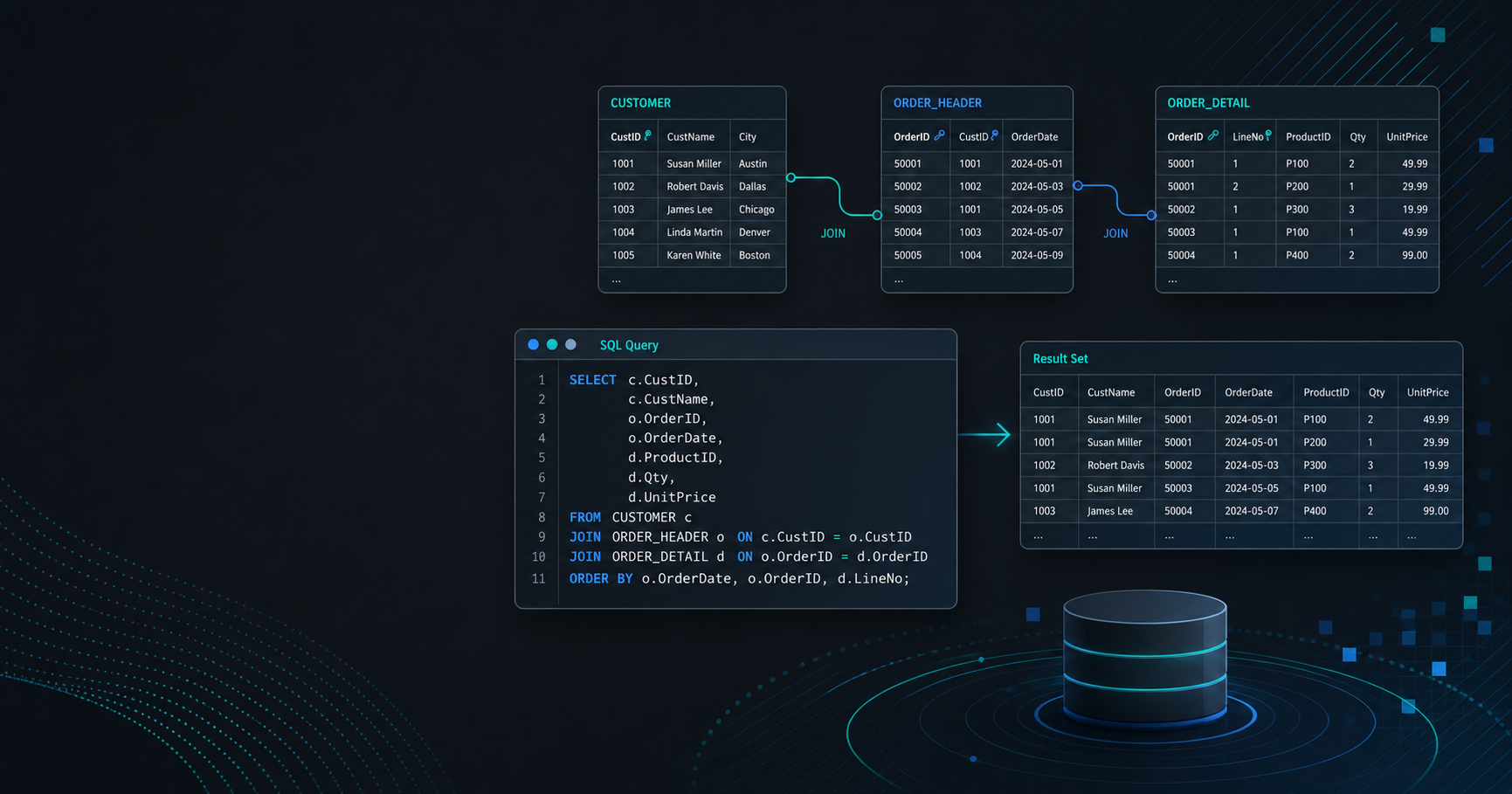
Why SQL matters on IBM i
SQL helps you:
- read data clearly
- join related tables
- write maintainable database logic
- integrate with modern tools
- reduce dependence on older access styles
That makes SQL useful both for newcomers and for teams modernizing existing applications.
The basic concepts
If you are just starting, focus on these terms:
- table
- row
- column
- query
- join
- index
- view
Once those are clear, most IBM i data work becomes easier to follow.
How SQL fits with older styles
IBM i can still support older file-based access patterns, but SQL is often the preferred approach for new work.
That does not mean old code disappears overnight. In real environments, SQL and older application logic often coexist. The best path is usually gradual improvement.
A simple example mindset
When you want to ask a question of the database, SQL gives you a direct way to say what you want.
That is better than manually assembling data from multiple places because SQL lets the database engine do the set-based work efficiently.
Common beginner mistakes
Avoid these mistakes:
- thinking SQL is separate from IBM i
- using SQL without understanding indexes
- writing queries without checking the result shape
- assuming one query style fits every use case
Good SQL work is precise and readable.
Why this matters for development
SQL is not just for reporting.
It supports application logic, data lookup, integration, and maintenance work. On IBM i, that makes it one of the most valuable tools in the modern stack.
Where this fits in the series
This article is a bridge between the data model explanation and the maintenance topics that follow.
If you want the platform foundation first, read the pillar article, What Is AS400 (IBM i)? A Complete Beginner’s Guide.