IBM i and mainframe platforms are both serious enterprise systems, but they are not the same thing.
The confusion is understandable because both are often described as reliable, secure, and built for important business workloads. The difference is in the platform design, the typical scale, and the operating model around the system.
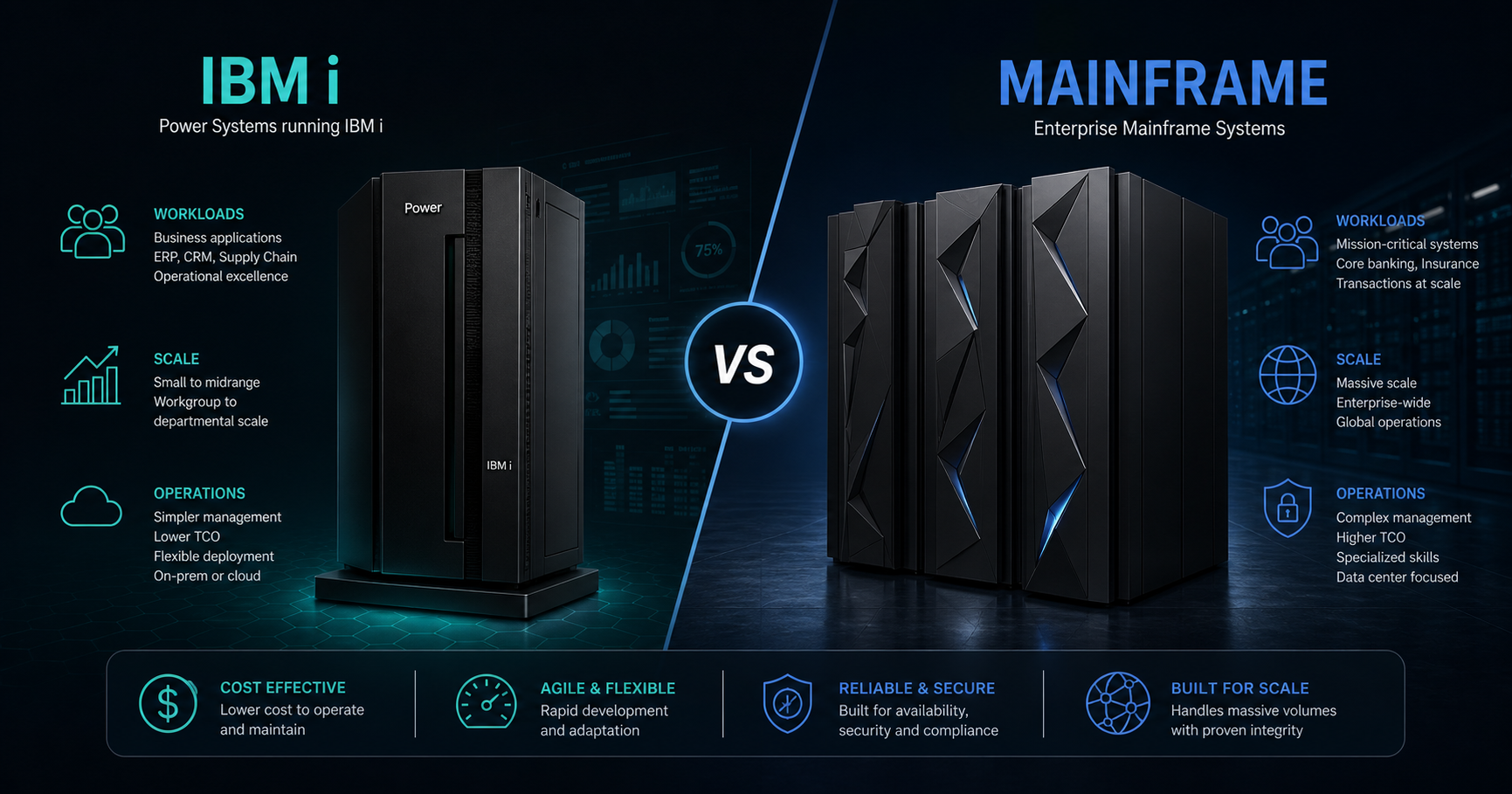
The short answer
IBM i is the operating environment commonly associated with IBM Power servers and midrange business workloads.
Mainframe systems are designed for very large-scale enterprise processing, especially where extreme transaction volume, consolidated operations, and specialized workload management matter.
Both can support mission-critical work. They are just optimized for different operational contexts.
Where IBM i tends to fit
IBM i is often a strong fit when an organization wants:
- integrated database and security services
- stable business applications with long life cycles
- modest-to-large transaction volumes
- a platform that can mix legacy and modern interfaces
Many IBM i environments are central to business operations, but not all of them need the very largest mainframe-style footprint.
Where mainframes tend to fit
Mainframes are usually associated with:
- very high transaction throughput
- broad consolidation of enterprise workloads
- large operational teams and formal process discipline
- industries with heavy compliance and availability requirements
That does not make mainframes “better” in a universal sense. It means they are built around a different set of scale assumptions.
Why people compare them
The comparison often happens because both platforms are:
- durable
- business-critical
- long-lived
- used in older and newer applications alike
But the comparison is not really about which one is more modern. It is about what kind of operational problem each platform is intended to solve.
A practical way to think about it
Use this rule of thumb:
- choose IBM i when you need a tightly integrated business platform with strong continuity and manageable operational scope
- think mainframe when the workload demands very large scale, centralized processing, and a specialized enterprise operating model
That is only a rule of thumb, not a universal verdict. Real-world decisions also depend on applications, staff skills, support model, and existing investments.
What beginners should avoid
Avoid treating the two as if one is simply a smaller version of the other.
That framing misses the real distinction. IBM i and mainframe environments differ in architecture, operational style, and typical workload profile. A better comparison asks which platform matches the business problem in front of you.
Why this matters
The distinction matters when teams discuss:
- modernization strategy
- migration planning
- staffing and skills
- vendor support
- operations and recovery expectations
If you use the wrong label, people may assume the wrong constraints.
Where this fits in the series
This article builds on the foundational explanation of the platform and prepares the reader for the deeper architectural and data-model topics that follow.
If you want the beginner baseline first, read the pillar article, What Is AS400 (IBM i)? A Complete Beginner’s Guide.