Application maintenance is where a lot of IBM i value either stays protected or slowly leaks away.
The platform often carries long-lived business logic. That means change management has to be disciplined. Small changes can have large effects if they are not reviewed, tested, and documented properly.
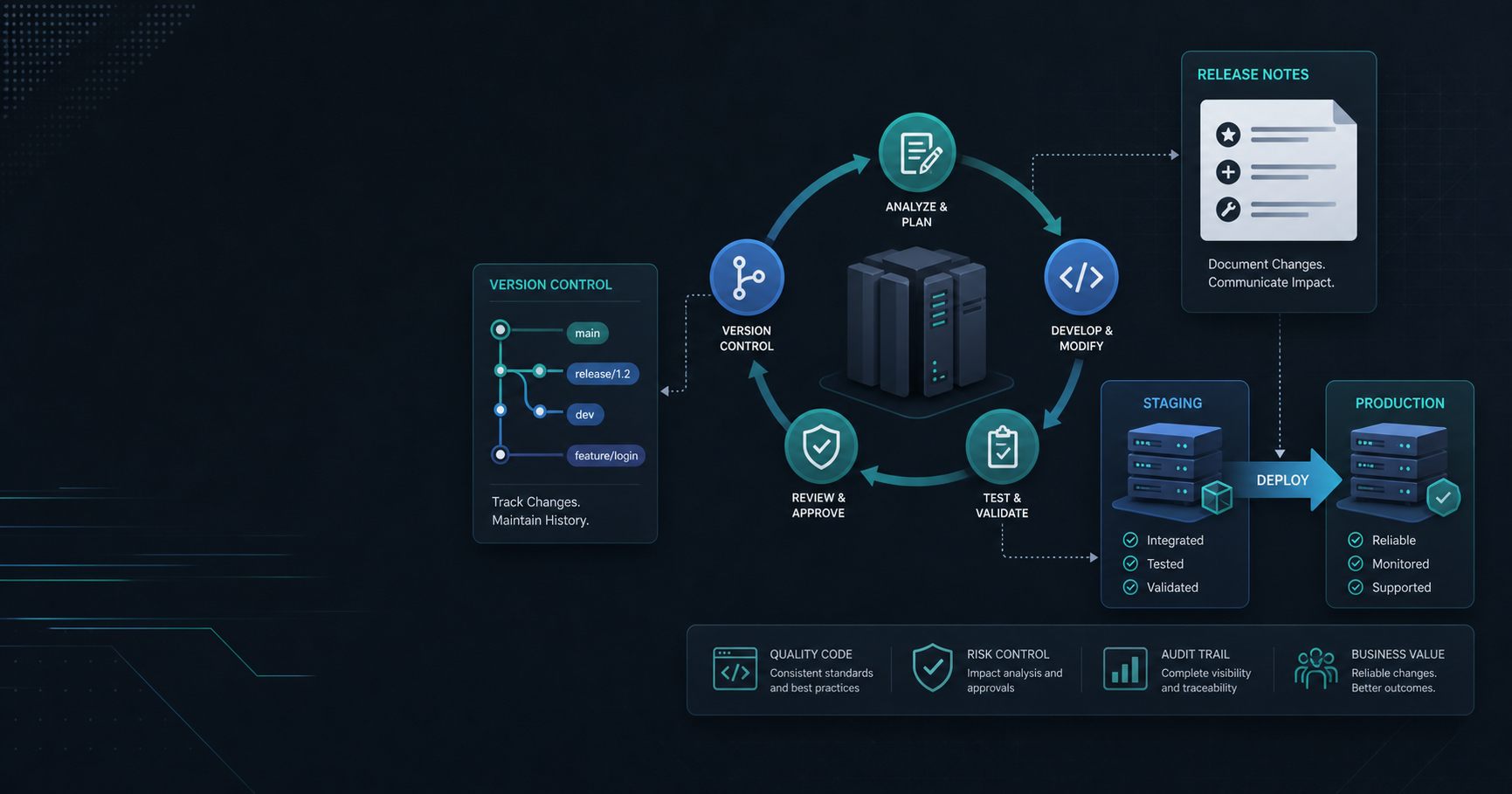
Why maintenance matters
Most IBM i systems are not greenfield projects.
They are living systems with:
- old code
- new code
- shared data
- operational dependencies
- business rules that have evolved over time
Good maintenance protects that accumulated value.
What change management should do
A solid change process helps you:
- understand the scope of the change
- keep source under control
- test before release
- communicate operational impact
- preserve a rollback path
That is how you reduce risk without stopping progress.
Why version control is essential
Version control gives you history, traceability, and team coordination.
Without it, maintenance becomes a guesswork exercise. With it, you can review changes, compare versions, and understand why a release behaved the way it did.
Testing should match the change
Not every change needs the same amount of testing, but every change needs some level of verification.
Ask:
- what business path changed?
- what data does it touch?
- what else depends on it?
- what would a failed release affect?
Those questions help shape a right-sized test plan.
Common beginner mistakes
Avoid these mistakes:
- changing code without a clear owner
- skipping documentation for “small” updates
- promoting changes without validation
- forgetting operational timing
The smallest change can still be the one that matters most in production.
A practical release rhythm
Many teams do best with a simple rhythm:
- understand the change
- update source in Git
- review the impact
- validate in a safe environment
- release intentionally
- document the result
That process is boring in the best possible way.
Where this fits in the series
This article prepares the reader for a more mature view of IBM i as a living production platform.
If you want the platform foundation first, read the pillar article, What Is AS400 (IBM i)? A Complete Beginner’s Guide.