IBM i modernization is usually a series of careful improvements, not a single rewrite.
Most organizations already depend on IBM i for stable business operations. The practical question is not whether to keep the core system, but how to make it easier to integrate, support, and evolve.
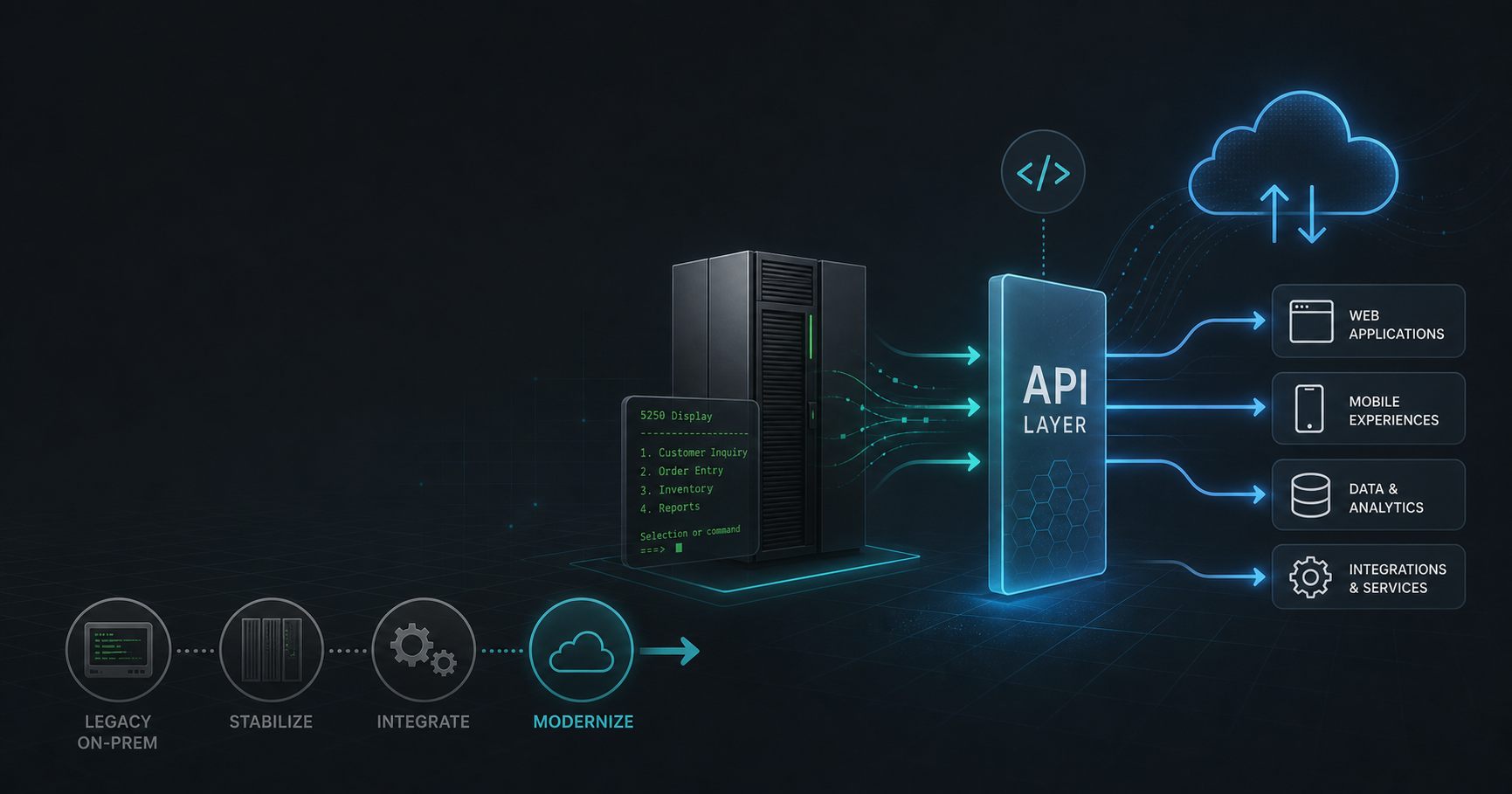
What modernization really means
Modernization on IBM i usually means one or more of these changes:
- exposing existing business logic through APIs
- using SQL more consistently for data access
- improving user interfaces
- strengthening source control and deployment discipline
- adding monitoring, logging, and automation
It does not automatically mean replacing RPG, COBOL, CL, or Db2 for i. In many environments, the most effective modernization strategy is to keep the reliable core and improve the edges around it.
Start with the business problem
The best modernization projects begin with a specific pain point.
For example:
- a green-screen flow is too slow for a customer-facing team
- a custom integration needs a stable API instead of file sharing
- reporting is difficult because data access is inconsistent
- deployment is risky because changes are not controlled well
Once the problem is clear, the technical approach becomes easier to choose. A good modernization plan should solve a business issue, not just make the system look newer.
The most common modernization paths
1. API enablement
If other systems need to call IBM i functions, APIs are often the cleanest bridge. A stable API lets you wrap existing logic without exposing internal implementation details.
2. SQL-first data access
Many IBM i environments still mix older file access patterns with modern SQL. Standardizing more of the read and write logic around SQL usually improves maintainability and makes integrations easier.
3. Interface refresh
A web UI, service portal, or mobile front end can sit on top of the same IBM i business logic. The goal is to improve usability without destabilizing the operational core.
4. Delivery discipline
Version control, code review, test promotion, and repeatable deployment steps often deliver more value than large architectural changes. Reliable delivery is part of modernization too.
What to modernize first
If you are starting from a stable IBM i application, prioritize the least risky improvements first:
- Put the source under clear version control.
- Document the critical business flows.
- Reduce direct coupling between the UI and core rules.
- Improve the most painful integration point.
- Add automated checks where manual effort is highest.
This sequence keeps the business running while building room for future changes.
What not to do
Avoid these common mistakes:
- rewriting everything because the system looks old
- changing multiple layers at once without rollback options
- modernizing the interface while leaving the data model undocumented
- replacing working logic before understanding it
IBM i systems often contain years of embedded business rules. If you do not preserve that knowledge, modernization can create more risk than value.
A practical mindset
The most useful modernization mindset is incremental:
- keep what is already dependable
- isolate what is hard to change
- improve the boundaries first
- prove each change with a real business outcome
That approach works especially well on IBM i because the platform is often already doing the hard part: running core operations reliably.
Where this fits in the series
This article sits in the middle of the beginner cluster. It comes after the naming and history articles and before the deeper operational and development topics.
If you want the foundation first, read the pillar article, What Is AS400 (IBM i)? A Complete Beginner’s Guide.