An IBM i career does not have to start with everything at once.
Many strong IBM i professionals begin with one practical entry point, then add adjacent skills over time. The platform rewards steady learning because real environments mix operations, development, database work, and business knowledge.
Start with the platform basics
Before anything else, learn:
- what AS400 and IBM i mean
- how the object model works
- how data is organized
- how jobs and batch work operate
Those basics make every later topic easier.
Common career entry points
People often enter IBM i work through one of these paths:
- operations or system support
- application development
- database support
- technical analysis
- business application administration
There is no single right door. The best starting point is the one closest to the work you already do.
Skills that build naturally
Once the basics are in place, useful next steps include:
- reading job logs and system messages
- working with SQL
- understanding source control
- learning RPG or CL where relevant
- learning backup, recovery, and scheduling
Those skills open up more responsibilities without forcing a sudden specialization.
How to think about growth
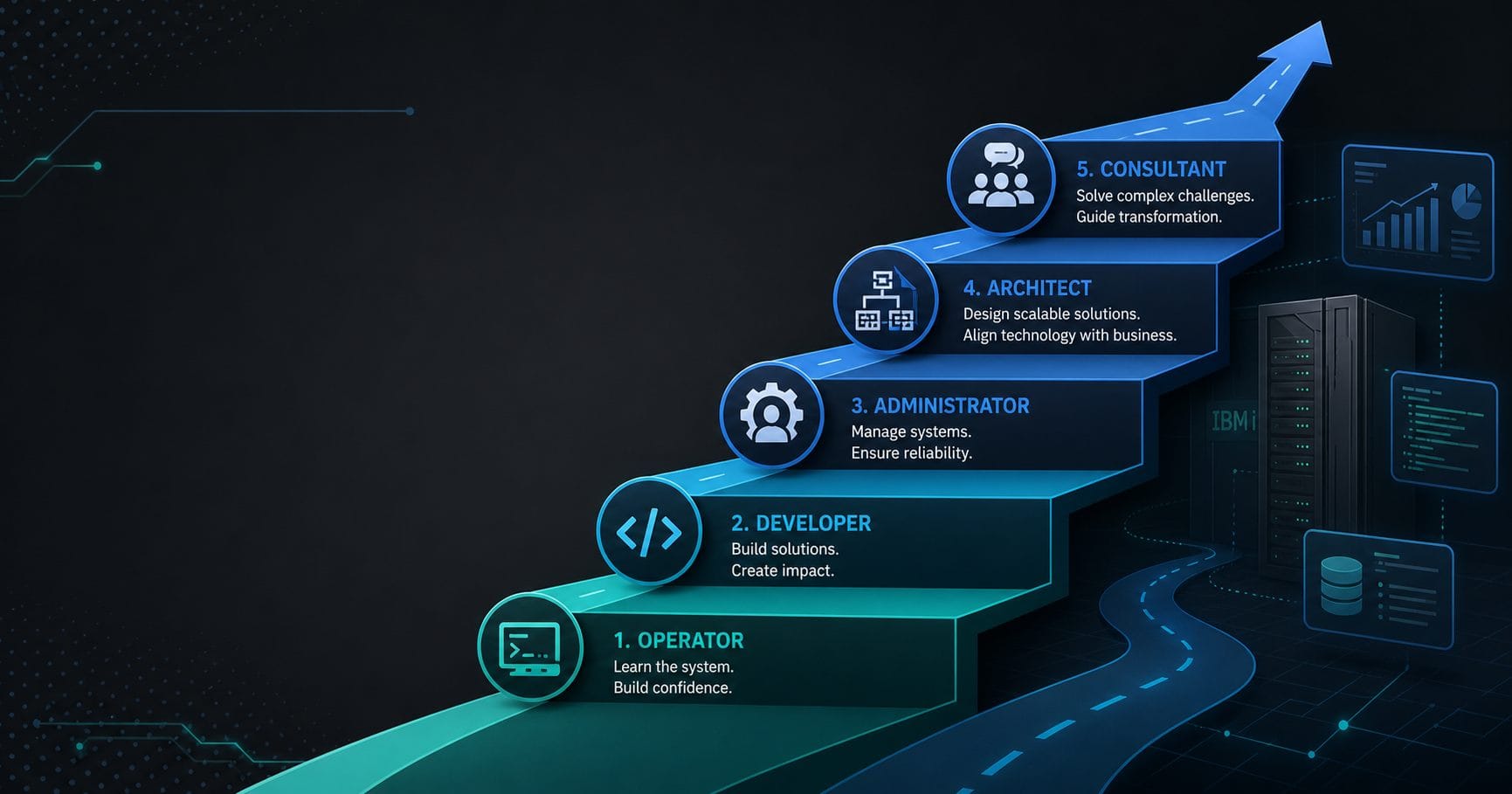
An IBM i career often grows in layers:
- understand the platform
- learn the application landscape
- own operational tasks
- contribute code or SQL
- help with releases and changes
- broaden into architecture or consulting
That progression is practical because it reflects how real IBM i teams work.
What to avoid
Avoid thinking you need to master everything immediately.
IBM i is broad, and the most useful people are usually the ones who understand a few areas deeply and know how the pieces connect.
Why the platform is a durable career area
IBM i careers remain relevant because businesses still rely on the systems for important work.
That means people who understand the platform well can help with:
- stability
- modernization
- maintenance
- integration
- operational continuity
Where this fits in the series
This final article closes the beginner cluster by turning knowledge into a learning path.
If you want to begin at the start, read the pillar article, What Is AS400 (IBM i)? A Complete Beginner’s Guide.